
What Silicon Valley Gets Wrong About Leadership in the Algorithm Era
The dashboard glows with perfect data. Every metric tracked. Every KPI measured. Every decision quantified. And yet, your team feels more disconnected than ever.
There's a seductive promise whispered through the corridors of tech companies and startup incubators across the globe: that leadership can be optimised, automated, and perfected through the right combination of data analytics and artificial intelligence. That if we just track enough variables, measure enough outcomes, and feed enough information into the right algorithms, we'll finally crack the code of human motivation and performance.
This promise is not just misguided. It's dangerous.
The tech industry's obsession with quantification has created a peculiar blind spot: the belief that what can't be measured doesn't matter. Yet the very things that separate transformative leaders from competent managers, the elements that inspire loyalty rather than mere compliance, the qualities that build movements rather than just businesses, these exist in the unmeasurable spaces between the data points.
The Seduction of the Dashboard
Picture the modern tech executive. They wake to a morning digest of overnight metrics. Their breakfast accompanies a review of engagement statistics. Their commute involves scanning performance dashboards. By the time they enter their first meeting, they've consumed hundreds of data points, each one supposedly bringing them closer to the truth about their organisation's health.
This data-saturated approach to leadership feels sophisticated. It feels modern. It feels like progress. And in many ways, it is. The ability to track, measure, and analyse organisational performance at scale represents a genuine advancement in management capability. The problem isn't the data itself; it's the delusion that data can replace the fundamentally human work of leadership.
Consider what happens when a leader becomes overly reliant on algorithmic thinking. They begin to view their people through the same lens they view their code: as systems to be optimised, variables to be controlled, inputs to be adjusted for maximum output. The language shifts subtly but significantly. Team members become “resources.” Human complexity becomes “variance.” The messy, contradictory, emotionally driven reality of human beings becomes noise to be filtered out rather than signal to be understood.
Managing Data Versus Leading People
The confusion between management and leadership has never been more pronounced than in today's algorithm-obsessed business culture. Management is indeed amenable to systematisation. You can create frameworks for project delivery, establish protocols for quality control, develop metrics for productivity assessment. These processes benefit enormously from data and automation.
Leadership, however, operates in an entirely different dimension. Leadership isn't about optimising the system. It's about understanding the humans within it. It's about recognising that the person who appears to be underperforming according to your productivity metrics might be dealing with a family crisis that they're too proud to mention. It's about knowing that the team member who looks perfectly fine in all your engagement surveys is actually contemplating resignation because they don't feel truly seen or valued.
These insights don't come from dashboards. They emerge from the quality of attention you bring to your interactions. They surface in the space you create for genuine dialogue. They reveal themselves when you stop trying to optimise the conversation and start actually listening to what's being said-and more importantly, what's not being said.
The tech leader who can read a room, who can sense the unspoken tensions beneath surface-level politeness, who can intuit when someone needs challenge versus support, this leader possesses a form of intelligence that no algorithm can replicate. Not because the technology isn't sophisticated enough, but because this type of knowing requires something that machines fundamentally lack: the lived experience of being human, with all its vulnerability, contradiction, and complexity.
The Illusion of Control
Perhaps the deepest mistake in Silicon Valley's approach to leadership lies in the assumption that people can be understood through the same reductionist thinking that works so well for technical systems. In code, every variable is knowable, every outcome predictable once you understand the logic. Debug the system, optimise the algorithm, and performance improves consistently.
Human beings don't work this way. We are not rational actors operating according to predictable patterns. We are contradictory, emotional, context-dependent creatures whose behaviour shifts based on factors that often remain invisible even to ourselves. The same feedback that motivates someone on Tuesday might deflate them on Wednesday. The leadership approach that works brilliantly with one team member falls completely flat with another.
This inherent unpredictability isn't a bug to be fixed. It's a fundamental feature of human consciousness. And the leader who tries to eliminate this complexity rather than work with it will find themselves increasingly disconnected from the people they're meant to inspire.
Emotional Intelligence: The Algorithm That Can't Be Coded
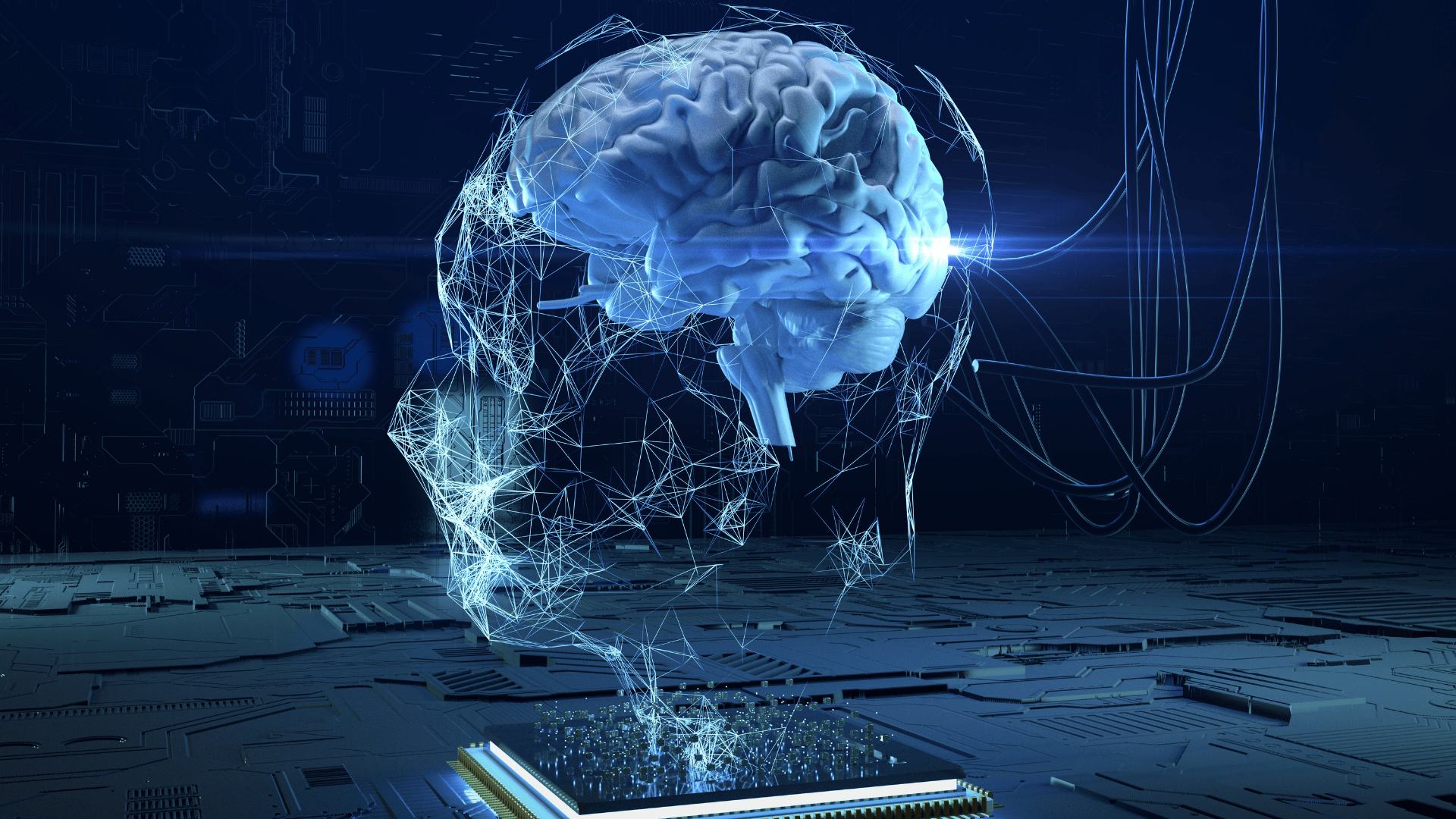
The irony of the algorithm era is that as artificial intelligence grows more sophisticated, the value of distinctly human capacities increases exponentially. The skills that matter most in leadership-emotional intelligence, empathy, authentic presence, the ability to hold space for difficult conversations-these aren't just resistant to automation. They become the primary differentiator between leaders who truly inspire and those who merely manage.
Think about the leaders who've had the deepest impact on your own development. Chances are, you don't remember them for their mastery of analytics or their innovative use of productivity tools. You remember them for how they made you feel seen, understood, and challenged to grow beyond your own limitations. You remember specific conversations where they helped you recognise something about yourself that you'd been unable to see. You remember moments when they held steady during chaos, not because they had perfect information, but because they had cultivated the inner stability to navigate uncertainty with grace.
These leadership moments can't be programmed. They emerge from years of self-awareness work, from the willingness to confront your own blind spots, from the courage to be vulnerable and genuine rather than hiding behind the persona of the all-knowing executive. They require you to do the uncomfortable work of understanding your own emotional patterns, your triggers, your defensive reactions, the ways you unconsciously replicate dysfunctional patterns from your past.
The Self-Awareness Imperative
Imagine a leader who operates primarily through algorithmic thinking. They optimise their communication style based on personality assessments. They schedule one-on-one meetings according to best practices. They follow the recommended frameworks for feedback delivery. On paper, they're doing everything right. In practice, their team feels managed but not inspired, directed but not developed, organised but not energised.
What's missing? Self-awareness. The capacity to recognise how your own unexamined assumptions, biases, and emotional patterns show up in your leadership. The willingness to acknowledge that the very tools you use to understand others-your metrics, your frameworks, your systematic approaches-might be serving as sophisticated forms of emotional avoidance.
The most human-centred leaders aren't those who reject data and analytics. They're the ones who recognise these tools as useful inputs whilst maintaining clear sight of what matters most: the quality of human connection, the depth of mutual understanding, the creation of environments where people feel safe enough to bring their full selves to their work.
When Your Tools Become Your Blind Spots
There's a particular trap that ensnares many tech leaders: the belief that their analytical prowess translates directly into leadership capability. They've mastered complex systems, built sophisticated products, solved intricate technical challenges. Surely leadership is just another problem to be analysed and solved?
This assumption creates a dangerous feedback loop. The leader approaches human challenges with the same mindset that works for technical challenges: break down the problem, identify the variables, implement the solution, measure the outcome. When this approach doesn't yield the expected results-because human beings resist being optimised like code-the leader's response is often to gather more data, create more sophisticated tracking systems, implement more detailed frameworks.
The tools themselves become obstacles to genuine understanding. The more you look at people through the lens of your productivity dashboards, the less you actually see them. The more you try to standardise human interactions through prescribed communication frameworks, the less authentic connection becomes possible. The more you attempt to measure engagement through surveys and metrics, the further you drift from the lived reality of your team's experience.
This isn't to suggest that data has no place in leadership. Used wisely, metrics can reveal patterns worth investigating, highlight areas needing attention, provide useful feedback on initiatives and changes. The key word is "wisely." Data becomes wisdom only when filtered through genuine human insight, when held lightly rather than grasped tightly, when used to generate questions rather than provide definitive answers.

The Human Paradox of an AI-Dominated World
Here's the twist that Silicon Valley's algorithm-obsessed culture consistently misses: as artificial intelligence handles more of the analytical, pattern-recognition, and optimisation work, the distinctly human elements of leadership become exponentially more valuable. The very things that can't be automated-emotional attunement, authentic presence, the capacity to inspire through genuine connection-these aren't just nice-to-haves. They're becoming the core competencies that separate transformative leaders from obsolete ones.
Consider what AI already does brilliantly: process vast amounts of information, identify patterns in complex datasets, optimise systems for efficiency, predict outcomes based on historical patterns. Now consider what AI fundamentally cannot do: care about the outcome, understand the felt experience of being human, recognise when breaking the pattern is exactly what's needed, hold space for someone's pain whilst they work through a difficult transition.
The leaders who will thrive in an increasingly automated world aren't those who try to compete with AI on its own terms. They're the ones who double down on developing the capacities that make them irreplaceably human. They invest in understanding themselves with the same intensity that others invest in understanding algorithms. They cultivate presence with the same dedication that others dedicate to productivity. They develop their capacity for authentic connection with the same rigour that others apply to data analysis.
Reclaiming the Human in Leadership
This reclamation of human-centred leadership isn't about rejecting technology or dismissing the value of data. It's about getting the hierarchy right. Your tools should serve your humanity, not replace it. Your metrics should inform your understanding, not define it. Your systems should support genuine connection, not substitute for it.
What does this look like in practice? It means entering conversations without predetermined agendas, willing to be surprised by what emerges. It means noticing your own reactions and patterns with curiosity rather than judgment. It means creating space for complexity and contradiction rather than rushing to resolution. It means being willing to say “I don't know” when you don't, and “I made a mistake” when you did.
Most fundamentally, it means recognising that leadership isn't something you do to people through the application of the right techniques and frameworks. Leadership is something that happens between people when authentic presence meets genuine need. It emerges in the space where someone feels truly seen-not as a data point or a resource, but as a whole human being navigating the complexity of their own growth and development.
Beyond Mechanistic Leadership
The choice facing today's leaders isn't between data and intuition, between systematic thinking and emotional intelligence, between efficiency and humanity. These false dichotomies themselves reflect algorithmic thinking-the belief that everything must be reduced to either/or. Reality is always more nuanced.
The real choice is whether you'll do the deeper work of understanding yourself and others with the same intensity that you apply to understanding your business metrics. Whether you'll cultivate the capacity to be present with discomfort rather than immediately trying to optimise it away. Whether you'll develop the courage to lead from a place of authentic vulnerability rather than hiding behind the false certainty of your dashboards and frameworks.
This work isn't easy. It's far simpler to rely on your tools, to convince yourself that more data will eventually reveal the answers you're seeking, to believe that leadership can be mastered through the right combination of techniques and systems. But simplicity isn't the same as effectiveness. The hard truth is that the most impactful leadership requires you to venture into territory that can't be mapped by algorithms: the messy, contradictory, beautifully complex reality of human beings trying to grow, contribute, and find meaning in their work.
The Antidote to Algorithmic Leadership
What Silicon Valley's mechanistic approach to leadership consistently overlooks is that leaders aren't made through the accumulation of frameworks and techniques. Leaders emerge through a process of deep self-understanding, through the willingness to examine their own patterns and blind spots, through the courage to show up authentically even when it feels uncomfortable or inefficient.
This emergence can't be rushed or optimised. It requires time, reflection, and often the support of someone who can help you see what you can't see yourself. It demands that you step away from the seductive certainty of your dashboards and enter the more ambiguous territory of genuine human development.
The leaders who will truly thrive in the algorithm era aren't those who become more machine-like in their thinking. They're the ones who become more deeply, authentically human. They're the ones who recognise that their capacity to inspire, to develop others, to create environments where people do their best work-these capabilities don't come from mastering the latest productivity framework or implementing more sophisticated tracking systems.
They come from doing the inner work that allows you to be genuinely present with others. From developing the self-awareness to recognise when your own unexamined patterns are showing up in your leadership. From cultivating the emotional intelligence to read the room, sense the unspoken, and respond to what's really happening rather than what your metrics tell you should be happening.
A Different Path Forward
If you've felt the tension between the data-driven approach to leadership that dominates tech culture and your own intuition that something essential is being lost, you're sensing something real. The algorithmic approach to leadership isn't just incomplete-it's actively misleading. It promises certainty whilst creating disconnection. It offers optimisation whilst missing what matters most.
The path forward requires a fundamental reorientation. Not rejecting data and analytics, but recognising them as tools in service of deeper human understanding rather than replacements for it. Not dismissing systematic thinking, but acknowledging its limitations when applied to the inherently unmeasurable work of inspiring and developing people. Not abandoning efficiency, but refusing to sacrifice genuine connection on its altar.
This path isn't about learning new techniques or mastering additional frameworks. It's about unlearning the belief that leadership can be reduced to a system to be optimised. It's about rediscovering the capacity for authentic presence that gets buried beneath layers of productivity tools and performance metrics. It's about recognising that the work of becoming a truly transformative leader is inseparable from the work of becoming more fully human.
The question isn't whether you can afford to invest in this deeper leadership development. In a world increasingly dominated by artificial intelligence, the question is whether you can afford not to. The leaders who will remain relevant and impactful aren't those who try to out-algorithm the algorithms. They're the ones who cultivate the irreplaceable human capacities that no amount of data or automation can replicate.
This is where genuine leadership development begins: not with another framework to implement or metric to track, but with the willingness to be seen, to examine your own patterns with honesty and courage, to develop the inner capacities that allow you to truly connect with and inspire others. Because leaders aren't made through the accumulation of techniques. They're revealed through the process of becoming more authentically themselves.
Ready to move beyond algorithmic thinking and develop the human capacities that will define leadership in the AI era? The work begins with being truly seen, not as a role or a function, but as a leader engaged in the lifelong process of understanding yourself and others more deeply. Because in a world of algorithms, the most powerful competitive advantage isn't data-it's humanity.